
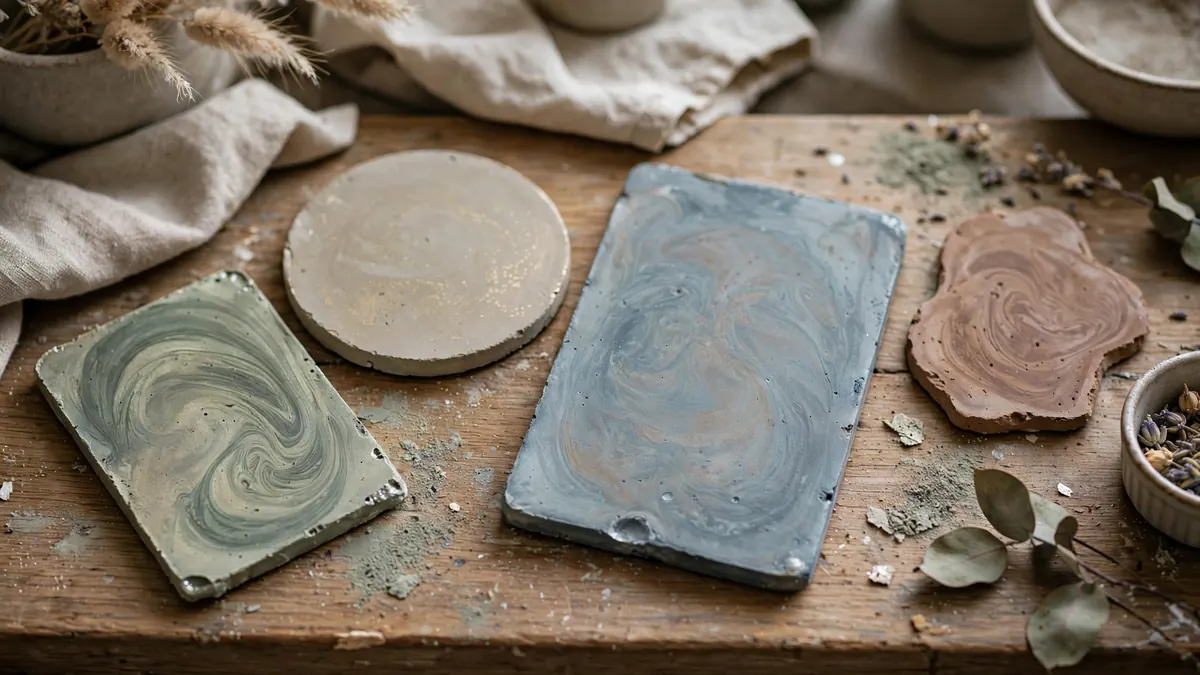
Mica powder for resin is a fine mineral pigment that adds colour, shimmer and depth to cured epoxy. Most pours use roughly one part mica to twenty parts resin by weight, which works out to about five percent of the total mixed volume. Start lower than you think you need, because you can always add more powder but you cannot take it out.
The effect depends on how much you load in and how you stir it. A light dusting gives a translucent wash that lets light pass through. A heavy load turns the same resin into an opaque, metallic surface, and everything between gives the pearl, ghost and swirl effects that make mica powder for epoxy resin so popular with furniture makers and casters.
What Mica Powder Actually Does in Epoxy
Mica is a layered mineral that splits into thin, flat platelets which reflect light. In clear epoxy they stay suspended and catch light from different angles, so the same panel can look silver in daylight and deep bronze under a warm bulb.
The powder does not dissolve. It disperses. That distinction matters, because undispersed clumps will show up as dark specks in the cured piece and no amount of sanding will fix them.
Particle size shapes the finish. Fine grades give a smooth, satin pearl that reads better on a tabletop. Coarser grades sparkle harder but can look gritty in thin pours, which suits a cast paperweight or small ornament.
Mica is also sold as a cosmetic ingredient, milled finer than the craft grades sold for casting. A jar labelled for soap making behaves differently in a deep pour, so read the label before you commit a whole batch.
Table of Contents
Choosing the Right Ratio
There is no single correct number, but there is a workable range.
- One percent or less: a faint tint, almost transparent. Good for a ghost effect over wood grain.
- Three to five percent: the sweet spot for most work. Clear colour, strong shimmer, resin still flows.
- Eight to ten percent: opaque metallic. Colour is solid and light no longer passes through.
- Above ten percent: the resin thickens, bubbles get trapped, and the cure can be affected.
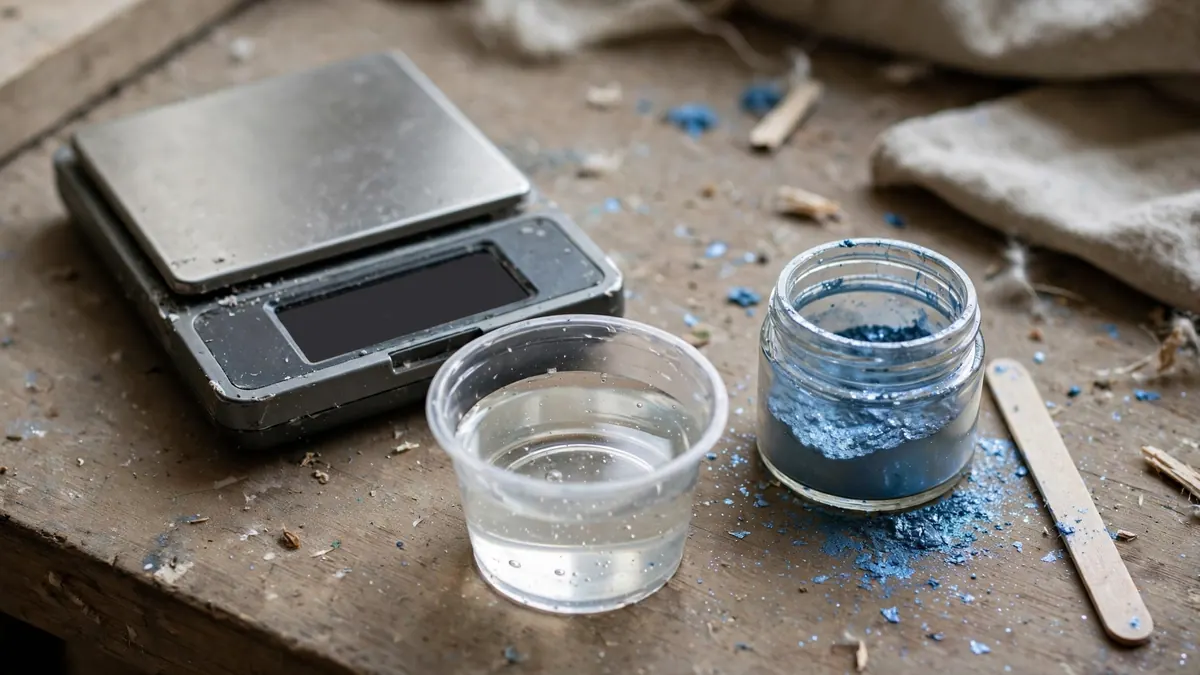
Weigh the powder on a small digital scale. A tablespoon of one brand weighs very differently from a tablespoon of another, and volume measures drift badly once humidity gets involved. A scale removes the guesswork in seconds.
If your resin kit lists a maximum pigment load, follow it. Manufacturers know where their product stops curing properly.
A kitchen scale that reads in single grams is enough for a small pour. Keep it on the bench and keep it clean, because a stray gram of hardener is a bigger problem than a stray gram of pigment.
Mixing Without Clumps
Clumps are the most common complaint, and they are almost always a technique problem. The order below keeps pigment out of the hardener cup and air out of the mix.
- Weigh your resin and hardener into separate cups and set the hardener aside.
- Add the mica powder to the resin only, not to the mixed batch.
- Stir slowly for two to three minutes until the colour is even and no dry pockets remain.
- Scrape the sides and bottom of the cup with a flat stick as you go.
- Let the pigmented resin sit for a few minutes so bubbles rise.
- Combine with the hardener and stir gently for the full time the kit specifies.
- Pour slowly from one corner and let the resin find its own level.
A drop of silicone or a light pass with a heat gun will pop surface bubbles, but do not overdo the heat. Too much warmth shortens the working time and can cause the pigment to settle unevenly.
If you are new to the material, a beginner’s guide to resin art walks through the same sequence with more detail on safety and setup.
How Ratios Change the Finished Look
A light load lets the substrate show through, so wood grain stays visible under a coloured glaze. A medium load hides the grain but keeps some depth, which suits coasters, trays and jewellery. A heavy load produces a solid metal look but loses the translucency that makes epoxy interesting.
Dark pigments such as charcoal or deep green read as solid at lower loads. Pale pigments such as pearl white or champagne need more powder to show up at all, and they show every bubble and speck of dust.
Two thin pours with different pigment loads create a depth that a single heavy pour cannot match. This is the technique behind most river tables, and the reason an LED epoxy resin table can glow through the resin instead of only off the surface.
Common Mistakes and How to Avoid Them
Adding powder to the hardener. Pigment disperses far better in the thicker resin component. Mixing it into the hardener first often leaves streaks that never fully blend.
Skipping a test piece. A small cup pour costs almost nothing and tells you how a given powder behaves in your resin. Do this before committing a large batch.
When the Result Goes Wrong
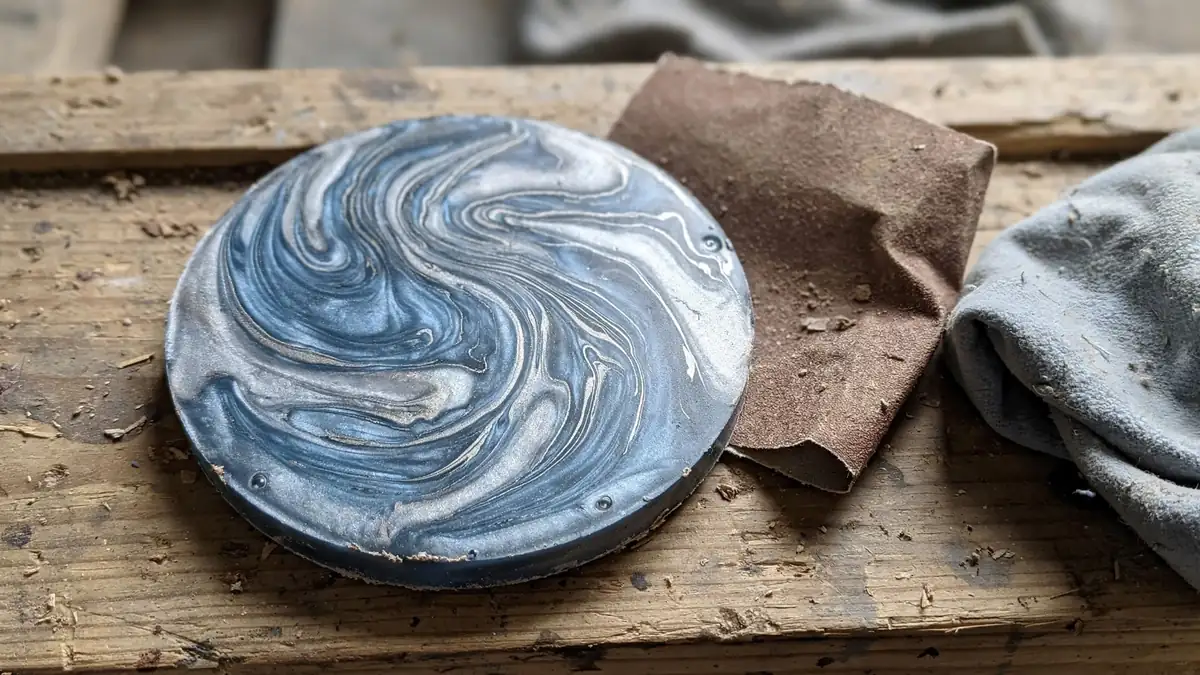
If the cured piece looks muddy, the load was too high. If it looks washed out, the load was too low or the powder was not fully dispersed. If you see dark specks, you had clumps. If the surface feels tacky in patches, the pigment load likely interfered with the cure, and the batch needs to come out.
Small defects can be rescued. Sand back the surface, clean it, and pour a thin clear coat. Deep problems inside a thick casting usually mean starting again, which is why test pours are worth the trouble.
For anything structural, such as a repair to a load-bearing piece of furniture, follow the manufacturer’s data sheet. Pigment changes the chemistry slightly, and a heavy load is not the place to experiment. The same caution applies to any epoxy repair on wood where the joint has to carry weight.
Mica Powder for Epoxy FAQ
How much mica powder should I add to epoxy resin?
Start at about one part powder to twenty parts resin by weight, which is roughly five percent. Adjust from there based on the effect you want. Weigh the powder on a scale, because different powders pack very differently by volume.
Can I add too much mica powder?
Yes. Above roughly ten percent the resin thickens noticeably, air bubbles become hard to release, and the cure can be affected. If your kit specifies a maximum pigment load, stay under it.
Why does my epoxy look dull after adding mica?
Dullness usually comes from under-mixing or from sanding through the pigment layer. Stir slowly until the colour is even, and finish with a clear topcoat to bring the shine back.

Martin Flood
Martin Flood has been working in the construction industry for over 20 years as a general contractor with expertise in remodeling projects that are large or small. He has furthered his career by specializing in epoxy resin flooring, providing excellent service to both commercial and residential clients. Martin’s experience enables him to offer professional advice on how to choose the right type of project based on your needs and budget.
View all posts by Martin Flood →