
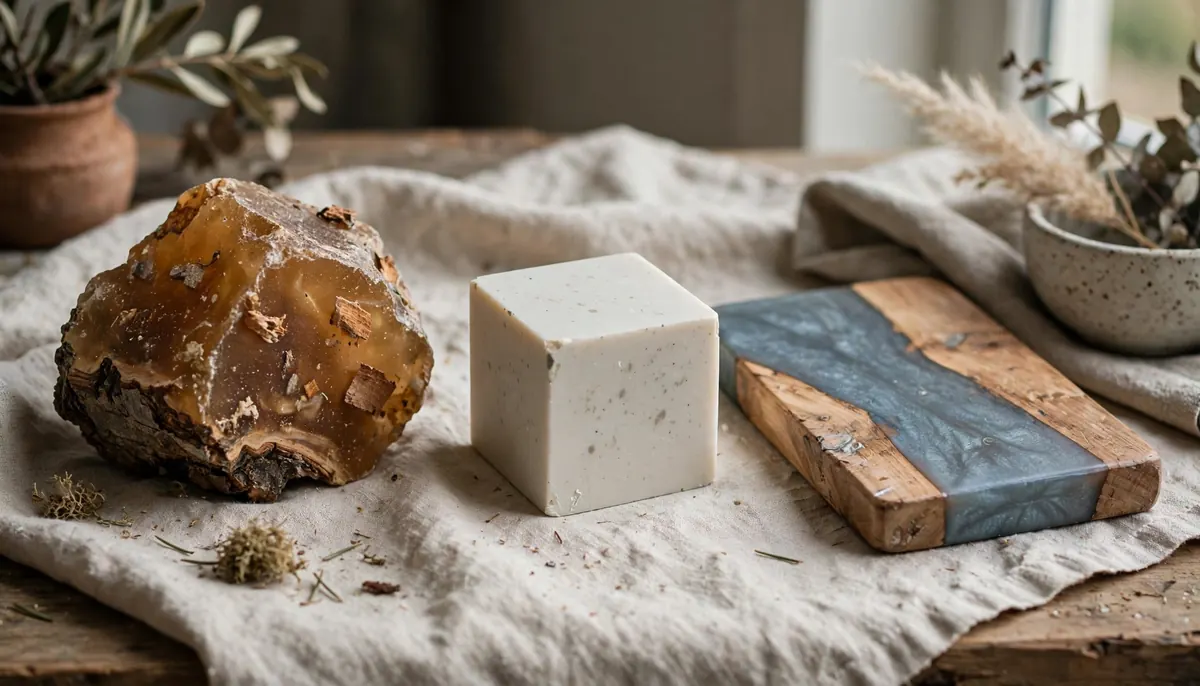
Resin is a thick, sticky substance that hardens into a solid, and the word covers two very different families. Natural resin oozes from trees and other plants as a wound seal, while synthetic resin is made in a factory from petrochemicals or plant oils. Epoxy is one type of synthetic resin, and it only cures when you mix two parts together.
That single definition causes most of the confusion in a workshop. A jar of amber lumps from a pine tree and a two-bottle kit from the hardware store share a name and almost nothing else. Knowing which family you have tells you how it will behave, what it will stick to, and whether it can be undone.
What Is the Definition of Resin?
A resin is a viscous organic substance that sets into a solid, either on its own or with a hardener. That is the whole definition, and it fits tree sap and laminating epoxy equally well.
The key word is organic. Resins are built from carbon-based molecules, usually long chains that tangle together as they set. Some set by losing water or solvent to the air. Some set because heat drives a chemical reaction. Some need a second chemical mixed in before anything happens at all.
Natural resins come from living plants. Synthetic resins come from a reaction vessel. Both can be clear, both can be amber, and both can be dissolved again with the right solvent in many cases.
Table of Contents
Natural Resin: Where It Comes From
Trees produce resin for the same reason you reach for a bandage. When bark splits, resin flows into the wound, thickens, and seals the opening against insects and fungi. Pine, fir, spruce, damar, mastic and copal all work this way.
People have harvested it for thousands of years. The ancient Egyptians imported pistacia resin for embalming, and Greek and Roman traders moved amber and frankincense along established routes. Amber itself is fossilised tree resin, which is why insects trapped in it survive as specimens millions of years later.
In a workshop, natural resin shows up in a few familiar places. Rosin, the residue left after turpentine is distilled from pine sap, is the block a violin bow is rubbed on. Shellac is a resin secreted by the lac insect, dissolved in alcohol and sold as flakes. Damar and mastic varnish belong to picture restorers rather than furniture shops.
Natural resin is usually brittle, sensitive to heat, and soluble in alcohol, turpentine or acetone. That solubility is a gift during restoration. A varnish that can be softened can be lifted without touching the finish underneath.

Synthetic Resin: How It Is Made
Synthetic resin is manufactured by building long molecular chains from smaller units, a process called polymerisation. Feedstock is usually petroleum or natural gas, though alkyd and some modern resins are built partly from plant oils such as linseed and soybean.
The family is large. Polyester, polyurethane, alkyd, acrylic, phenolic, vinyl ester and epoxy all sit under the synthetic umbrella. Each one sets by a different route, and that route decides how you use it.
Thermoplastic resins soften every time you warm them. Think of hot glue sticks and vinyl. Thermosetting resins cross-link into a permanent three-dimensional network and will not melt again. Epoxy, polyester and phenolic are thermosets. Heat a cured thermoset and it will char or burn long before it flows.
That difference matters in repair work. A thermoplastic joint can often be reopened with heat. A thermoset joint has to be cut, ground or chemically stripped.
Epoxy Resin: Two Parts, One Cure
Epoxy is a thermosetting resin that cures only when a resin component and a hardener are combined in a specific ratio. Get the ratio wrong and you get a sticky, under-cured mess that never fully hardens.
The chemistry is straightforward in principle. The resin part carries epoxide groups, and the hardener carries molecules that react with them. Once mixed, the two begin linking into a rigid network. Working time, often called pot life, runs from a few minutes for a fast-setting adhesive to well over an hour for a slow laminating system.
Epoxy has real advantages. It bonds to wood, metal, glass and cured concrete, shrinks very little as it cures, and resists water well. It also has limits. Ultraviolet light degrades most clear epoxies over time, turning them yellow and chalky, which is why exterior clear coats need a UV-stabilised grade or a varnish topcoat.
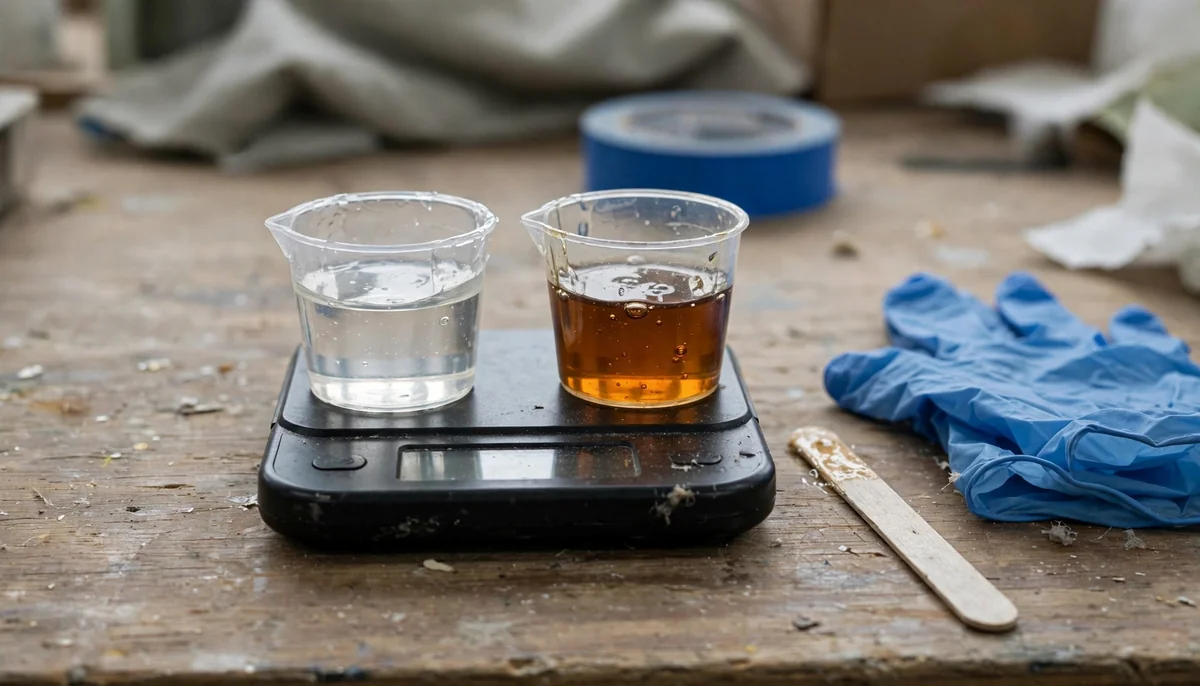
Mixing by volume is fine for small pours where the manufacturer prints a volume ratio. For anything structural, weigh the two parts on a digital scale. Volume ratios hide errors that weight ratios expose.
How to Tell Which Resin You Have
Start with the container. A single bottle that cures on its own is a one-part resin, usually a solvent-borne or waterborne system. Two bottles sold as a set are almost certainly a thermoset that needs mixing.
Then test a cured scrap. Warm it gently with a heat gun. If it softens and turns tacky, it is thermoplastic. If it scorches without flowing, it is thermoset.
Solvent behaviour is the next clue. Alcohol dissolves shellac and many natural resins. Acetone attacks polyester and most cured epoxies only after prolonged soaking, and it will not touch a fully cross-linked phenolic. Lacquer thinner sits somewhere in the middle.
Smell tells you something too. Polyester resin carries a sharp styrene odour that lingers, which is why it needs ventilation and a respirator with the right cartridge. Epoxy has a mild, faintly sweet smell and a reputation for skin sensitisation that builds with repeated exposure. Nitrile gloves are the standard barrier for epoxy work.
Safety and Code Basics
Resin work is a chemical process, and the rules that apply are ordinary workplace safety rules. The Occupational Safety and Health Administration requires employers to provide chemical hazard information and suitable protective equipment, and the same logic applies in a home shop.
Ventilation comes first. Styrene, solvents and amine hardeners all belong outdoors or under strong local exhaust. A dust mask does nothing for vapours. You need an organic vapour cartridge, and for styrene work a supplied-air or full-face system is the safer choice.
Skin protection is the second rule. Epoxy sensitisation is cumulative and permanent for some people, which means a reaction that starts mild can become severe after enough contact. Long sleeves, nitrile gloves and eye protection are the minimum.
Electrical work has its own code. The National Electrical Code, maintained by the National Fire Protection Association, sets the rules for enclosures and potting compounds used around wiring. If you are embedding anything electrical in resin, check the product data sheet and your local code before you pour.
Common Mistakes with Resin
The failures repeat across every resin type, and most of them come down to preparation rather than chemistry.
- Mixing epoxy by eye instead of by weight, which leaves soft spots that never cure.
- Pouring too deep in one pass, which traps heat and can crack or discolour the casting.
- Skipping the seal coat on porous surfaces, which lets air escape and leaves bubbles behind.
- Working in a cold shop, since most resins need a minimum temperature to cure properly.
- Assuming every clear resin is UV stable, when most are not.
- Reusing mixing cups, which leaves partially cured residue that ruins the next batch.
If you are embedding paper or printed items, the surface coating matters more than the resin. The same principle applies whether you are sealing a label or a photo, and the answer to whether normal stickers can go in resin depends on whether the adhesive and paper are sealed first. For a broader look at how one common resin performs under load, this piece on whether polyester resin is strong covers the practical limits.
Adhesives get mislabelled constantly. Cyanoacrylate, sold as superglue, is a separate chemistry from casting and laminating resins, and this explanation of whether superglue is a resin settles the naming question.
When to Call a Professional
Small pours, repairs and craft castings are well within reach for a careful DIYer. Step back when the job involves structural bonding, large volumes or anything electrical.
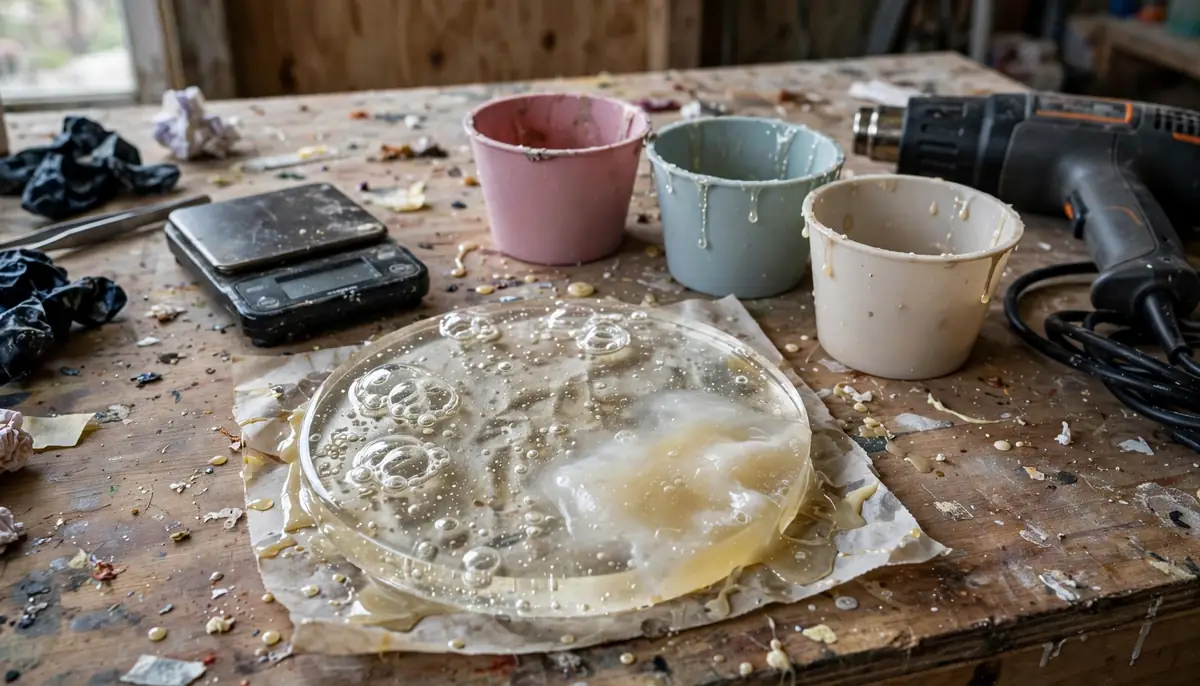
Structural epoxy work on load-bearing timber, boat hulls or vehicle panels needs an engineered system with a specified mix ratio and cure schedule. Large pours generate serious exotherm, the internal heat released as the resin cures, and a deep casting can scorch, crack or warp without controlled cooling. Encapsulating live wiring or electrical components falls under code requirements that a general-purpose casting resin may not meet.
Restoration work has its own line. Lifting a varnish with the wrong solvent can strip an original finish that took a century to develop. If a piece is genuinely old or valuable, test on a hidden area first, or hand it to a conservator.
Resin Definition FAQ
Is resin natural or synthetic?
Both. Natural resin comes from plants, mostly trees, as a wound-sealing fluid that hardens on exposure to air. Synthetic resin is manufactured from petrochemical or plant-oil feedstock through polymerisation. The two share a name because early synthetic versions were made to imitate the natural material.
Is epoxy the same as resin?
Epoxy is one type of synthetic resin. The word resin covers polyester, polyurethane, alkyd, acrylic and phenolic systems as well. What sets epoxy apart is that it always needs a hardener mixed in at a specific ratio before it will cure.
What is the simplest resin definition?
A resin is a sticky organic substance that sets into a solid. That definition covers tree sap, shellac flakes, two-part epoxy and casting polyester. The setting method varies widely, from air drying to a chemical reaction triggered by mixing or heat.
Can natural resin be dissolved again?
Often yes. Shellac redissolves in alcohol, damar and mastic lift in turpentine, and many plant resins soften with acetone. Thermosetting synthetics such as epoxy and polyester will not redissolve once fully cured, which is the main practical difference between the two families.
Does resin go bad in storage?
Yes, and the shelf life varies by type. Polyester resin and its catalyst degrade over months, epoxy hardeners darken and thicken, and natural resins dry out and crumble. Store containers sealed, upright and out of direct sun, and check the label for the manufacturer’s stated shelf life.

Martin Flood
Martin Flood has been working in the construction industry for over 20 years as a general contractor with expertise in remodeling projects that are large or small. He has furthered his career by specializing in epoxy resin flooring, providing excellent service to both commercial and residential clients. Martin’s experience enables him to offer professional advice on how to choose the right type of project based on your needs and budget.
View all posts by Martin Flood →