
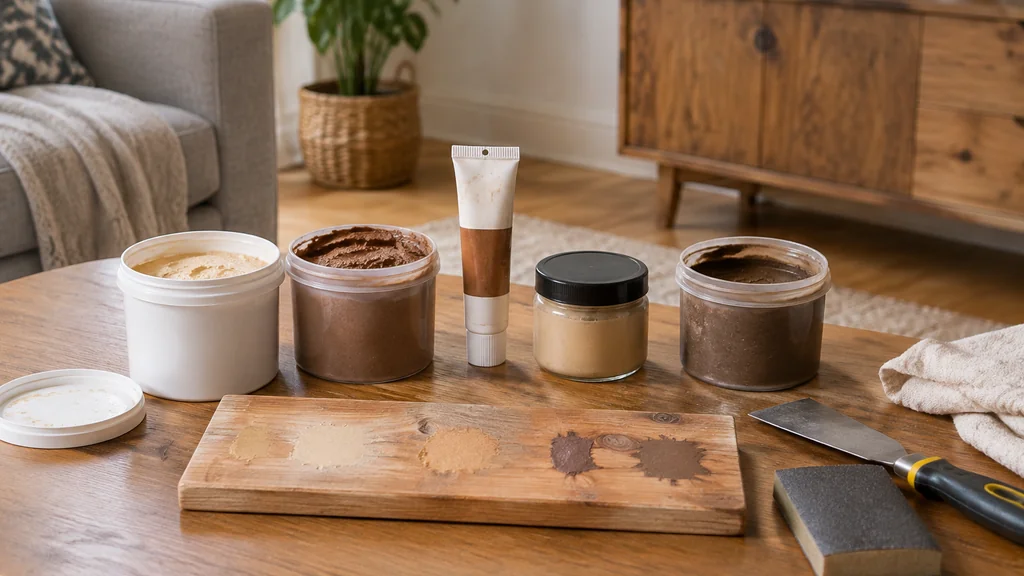
Wood repair putty is a thick, mouldable filler you press into a defect and sand back once cured. It suits small holes, cracks, dents and screw holes. A wood repair compound covers the same ground but often cures harder and takes paint or stain better, while epoxy putty for wood is the two-part option for rot, structural gaps and anywhere the repair has to hold a screw. Multi purpose putty is the tub you grab for a quick cosmetic fix, and it is the one most likely to disappoint you on a load-bearing repair.
The differences matter most when you decide what to buy. A tub of wood filler and a two-part epoxy can look similar in the shop but behave differently after curing.
What Each Type of Wood Repair Putty Actually Is
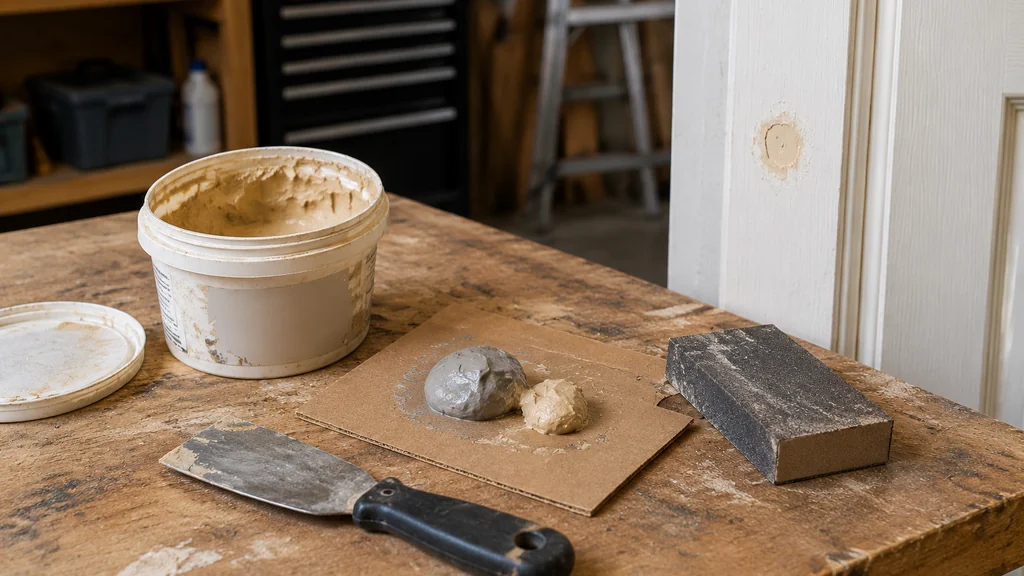
Water-based wood filler is the everyday product. It is a paste of binder, chalk or wood dust and water. It shrinks as it dries, sands easily and takes paint well. It is not waterproof and it has almost no structural strength.
Solvent-based filler dries faster and shrinks less. It smells strongly, and it can lift a finish if you apply it over old shellac or varnish without testing first.
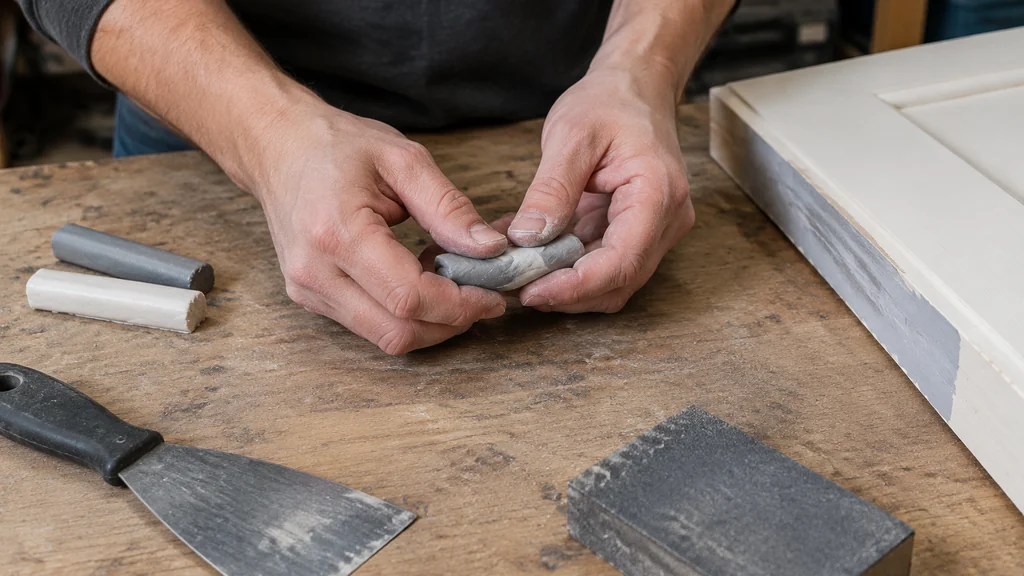
Two-part epoxy putty for wood comes as a resin and a hardener you knead together. It cures by chemical reaction, so it does not shrink and it sets hard enough to drill and tap. It is the only one of the group I would trust around a hinge screw or a rotten window sill.
Multi purpose putty is a general filler sold for wood, plaster and masonry. It is convenient and cheap. Read the label before you use it on anything that flexes, because many versions stay slightly soft.
Table of Contents
The Main Types Compared
Water-based wood filler. Best for dents, nail holes and shallow cracks indoors. Sands beautifully. Shrinks, so it may need a second pass. Not for wet areas.
Solvent-based wood filler. Best for a fast repair before painting. Dries hard and shrinks less than water-based. Strong odour, and it needs ventilation.
Epoxy putty for wood. Best for rot, missing sections, hinge and latch repairs, and exterior trim. No shrinkage, high strength, waterproof. Harder to sand and more expensive.
Penetrating epoxy. Not a putty at all. It is a thin liquid that soaks into soft, spongy timber and hardens it. You use it before filling, not instead of filling. There is a full walkthrough of that stage in this guide to penetrating epoxy for soft and rotted wood.
Multi purpose putty. Best for a quick cosmetic patch where strength does not matter. Check the label for interior or exterior use.
How to Choose the Right Compound for the Job
Work through these questions in order.
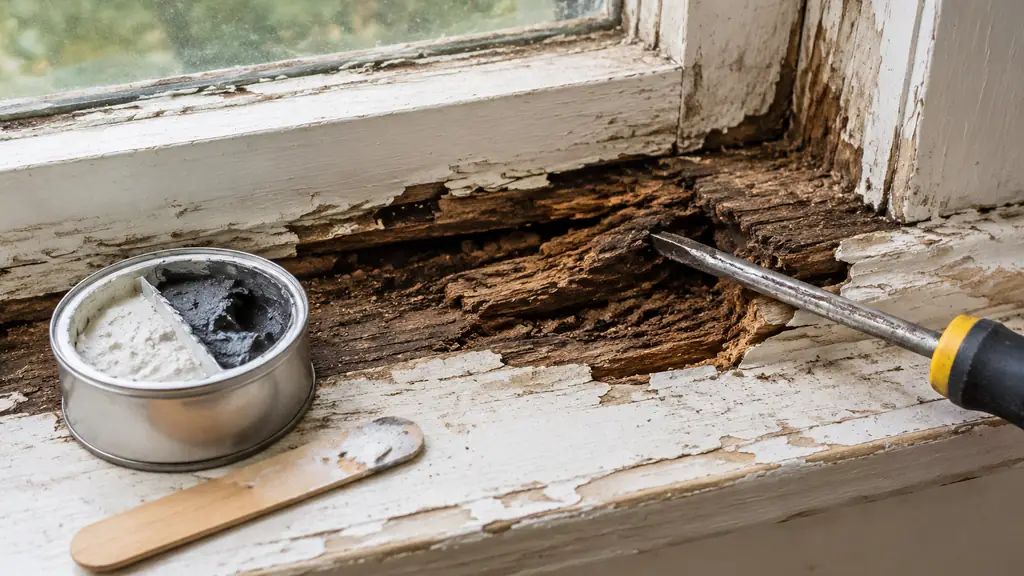
- Is the timber soft or crumbly? If yes, it is rot, and filler alone will fail. Treat and consolidate first.
- Will the repair take a screw, a hinge or a nail? If yes, use epoxy putty.
- Is it indoors, dry and cosmetic? Water-based filler is fine and easiest to finish.
- Will it get wet? Use epoxy, or a filler the label rates for exterior use.
- Does the finished surface need to match bare wood? Test the filler on an offcut first. Most fillers take paint far better than stain.
That last point catches people out. A filler that claims to accept stain often dries lighter or greyer than the surrounding timber, and no amount of stain hides it. If the repair is on a visible bare-wood surface, do a test patch.
Step-by-Step: Filling a Defect Properly
This sequence works for a dent, a crack, an old screw hole or a small rotten patch that has already been consolidated.
- Dig out loose material. Remove every crumb of soft wood, old filler and dust with a chisel or an awl. Filler bonds to sound timber only.
- Check for rot. Probe the surrounding wood with a screwdriver. If it sinks in, stop and treat the rot before you fill.
- Dry the area. Damp timber traps moisture under the filler and the patch will lift later.
- Mix or load the filler. For epoxy, knead the two parts until the colour is even, with no streaks. For tub filler, stir it, because water separates out on the shelf.
- Press it in, slightly proud of the surface. Overfill by a small amount. Underfilling means a hollow you have to fill again.
- Let it cure fully. Water-based filler dries pale and hard. Epoxy cures by reaction and needs the time on the label. Cool weather slows both.
- Sand flush. Use a sanding block, not your fingers, so you keep the surface flat. Work from a coarse grit to a fine one.
- Prime and finish. Bare filler drinks paint. Seal it first or the patch will show as a dull spot.
For a door edge, a hinge mortise or a lock cutout, the order changes slightly because the repair has to hold hardware. That process is set out in this guide on how to repair a door with wood filler.
Where People Go Wrong
Consolidate first, then fill. This epoxy resin wood filler guide for rot and damage walks through the whole repair.
Using tub filler on a hinge. Screws pull straight out of water-based filler. Use epoxy putty, or better, cut out the damaged section and glue in a sound piece of timber.
Skipping the test patch. Fillers and finishes interact. A solvent filler under a water-based topcoat can bleed. Test on scrap.
Sanding too soon. Soft filler clogs paper and tears out of the hole. Wait until it is genuinely hard.
Overfilling a shallow dent. A deep proud blob of epoxy is hard work to sand back. Keep the excess small.
Ignoring temperature. Most fillers and epoxies have a working range on the label. Below it, curing stalls and the patch stays tacky.
Tools and Materials
You need less than you think. A putty knife with a flexible blade, a mixing stick or scrap card, a sanding block, a range of grits, a dust brush and a chisel or awl for cleaning out the defect. Add nitrile gloves when working with epoxy. Add a respirator for solvent-based products.
For epoxy, a digital scale helps if you are mixing by weight from tins. For kneaded putty sticks, you judge the ratio by colour. Check the spec sheet for the mix ratio and the cure time at your workshop temperature, because guessing is how soft patches happen.
Cost and When to Call a Pro
Tub filler is cheap and a small tub lasts years. Epoxy putty costs more per repair but goes further than you expect, and one cartridge covers a lot of small jobs. The real cost is time, and epoxy usually wins there because it does not shrink and does not need a second pass.
Call a professional when the rot runs deeper than the surface, when a structural member is affected, or when the repair is on a listed or heritage property where the wrong material can cause damage. Sills, lintels, floor joists and anything carrying load are worth an expert eye. So is a repair on a piece with real value, where a visible patch would cut what it is worth. If the timber is soft across a wide area rather than in one spot, get advice before you buy anything.
Wood Repair Putty FAQ
Is wood repair putty the same as wood filler?
Mostly, yes. Putty and filler are used interchangeably in shops. The useful distinction is between tub fillers, which are water or solvent based, and two-part epoxy putties, which cure by chemical reaction and are far stronger.
Can I use multi purpose putty on wood?
Sometimes. Many multi purpose putties are rated for wood, plaster and masonry, but they vary a lot. Check the label for interior or exterior use and for strength. Do not use a general putty where the repair has to hold a screw.
Does epoxy putty for wood take stain?
Usually not well. Epoxy is dense and does not absorb stain the way timber does, so it tends to sit lighter or darker than the surrounding wood. On a bare-wood surface, use a tinted filler matched to the species, or plan to paint the repair.
How long before I can sand wood filler?
Water-based filler is usually sandable once it has dried pale and hard, which is often a few hours indoors. Epoxy needs its full cure time, which is longer in cold weather. If the surface feels cool or tacky, leave it. Sanding soft filler tears it out of the hole.
Can I fill a rotten window sill with putty?
Only after you have dealt with the rot. Probe the timber first. If it is soft, treat it and consolidate it with a penetrating epoxy, let that cure, then fill the void with an epoxy putty. Filler straight over rot can fail.

Martin Flood
Martin Flood has been working in the construction industry for over 20 years as a general contractor with expertise in remodeling projects that are large or small. He has furthered his career by specializing in epoxy resin flooring, providing excellent service to both commercial and residential clients. Martin’s experience enables him to offer professional advice on how to choose the right type of project based on your needs and budget.
View all posts by Martin Flood →