
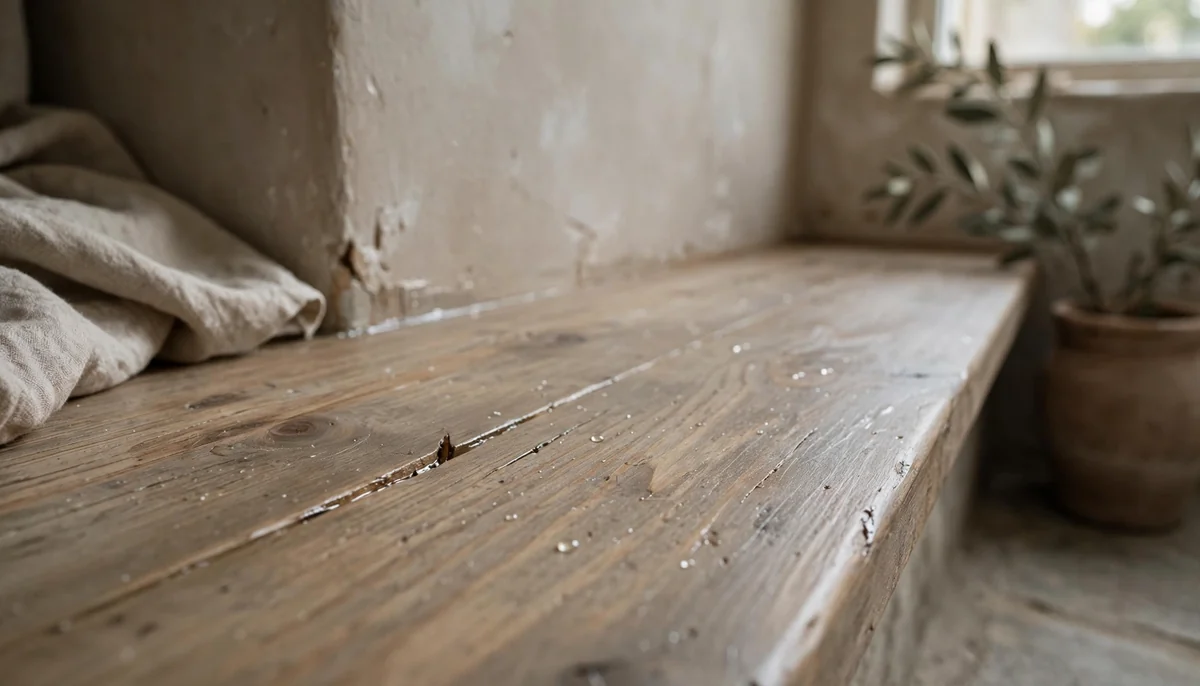
An epoxy wood sealer is a two-part resin coating that soaks into bare timber and cures into a hard, water-resistant skin. It works best on dry, sound wood that has been sanded back to raw fibre, and it fails on wet, painted, or oily surfaces. If the wood is still damp or the grain is sealed under old finish, the epoxy will sit on top and peel instead of bonding.
I use epoxy on window sills, door bottoms, porch posts, and any piece of old trim where the grain has gone soft but the shape is still worth saving. It is not a cure for rot that has eaten through the board. It is a way to consolidate the fibres that are left and keep water out of them.
What Epoxy Sealer Actually Does to Wood
Wood moves with moisture. It swells in humid air and shrinks in a dry house, and every one of those cycles opens small checks along the grain. Water gets into those checks, sits there, and starts the rot cycle. An epoxy resin sealer for wood stops that cycle by filling the surface pores and locking the fibres in place.
The cured film is not flexible like paint. It is hard, and that hardness is the point. On a soft sill or a punky post bottom, the epoxy soaks in and sets the fibres so they hold a screw again. On a sound board it forms a barrier that sheds water instead of absorbing it.
Two things it will not do. It will not penetrate more than a few millimetres into dense hardwood, so it cannot rescue a board that is rotten through the middle. And it will not stick to a surface that is already sealed, oily, or damp. Prep decides whether the job lasts five years or five months.
Table of Contents
Choosing the Right Epoxy for the Job
Not every two-part resin is built for wood. The hardware aisle has coatings meant for garage floors and bar tops, and those cure glass-hard with almost no give. On exterior trim that flexes with the seasons, a rigid coating cracks at the joints.
Look for a product labelled as a wood consolidant or penetrating epoxy, usually a low-viscosity resin that wets out the grain before it gels. WEST SYSTEM and System Three both make marine epoxy systems used for wood repairs. Marine-grade laminating epoxy is the traditional choice for exterior work because it is formulated to tolerate damp conditions and UV exposure once topcoated. If you are weighing resin against other fillers and hardeners for a repair, this comparison of what you can use instead of epoxy resin covers the alternatives honestly.
Check the label for pot life and recoat window. A slow hardener gives you 20 to 30 minutes of working time in a warm shop, which is enough to coat a sill and its end grain. A fast hardener sets in five, and you will be mixing a second batch before the first one is brushed out.
Mixing ratio matters more than most people expect. Most systems are 1:1 or 2:1 by volume, and eyeballing it leaves unreacted resin that stays tacky for days. Measure in two clean cups, scrape the sides, and stir for a full two minutes.
Step-by-Step: Sealing Wood With Epoxy
Work in this order and the coating will bond. Skip a step and you will be sanding it all off again.
- Dry the wood. Aim for moisture content under 15 percent. A cheap pin meter from the hardware store tells you enough. Wet wood outgasses and pushes the resin off the surface.
- Remove all finish. Sand, scrape, or strip back to bare fibre. Old varnish, oil, and wax all act as release agents.
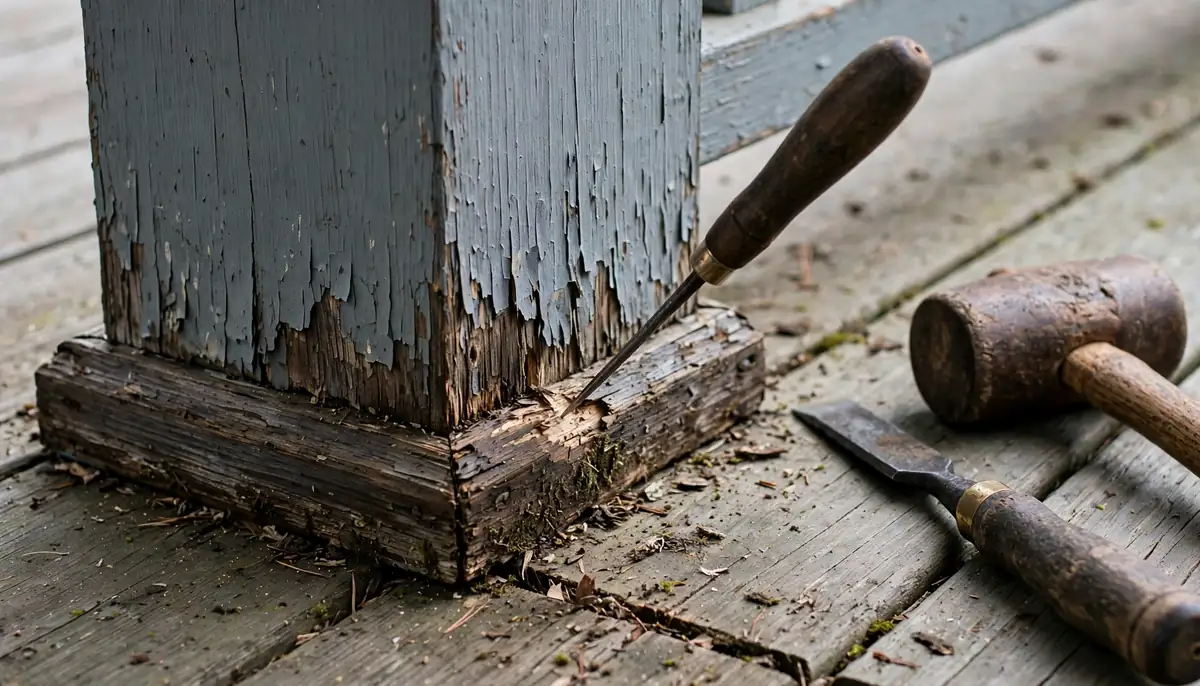
- Cut out active rot. Probe with an awl. Soft, spongy wood comes out with a chisel until you hit firm grain. Treat the cavity with a borate-based preservative and let it dry.
- Sand and clean. 80 to 120 grit is plenty. Blow out the dust, then wipe with denatured alcohol and let it flash off.
- Mix small batches. Two or three ounces at a time. Stir slowly to avoid whipping in air bubbles.
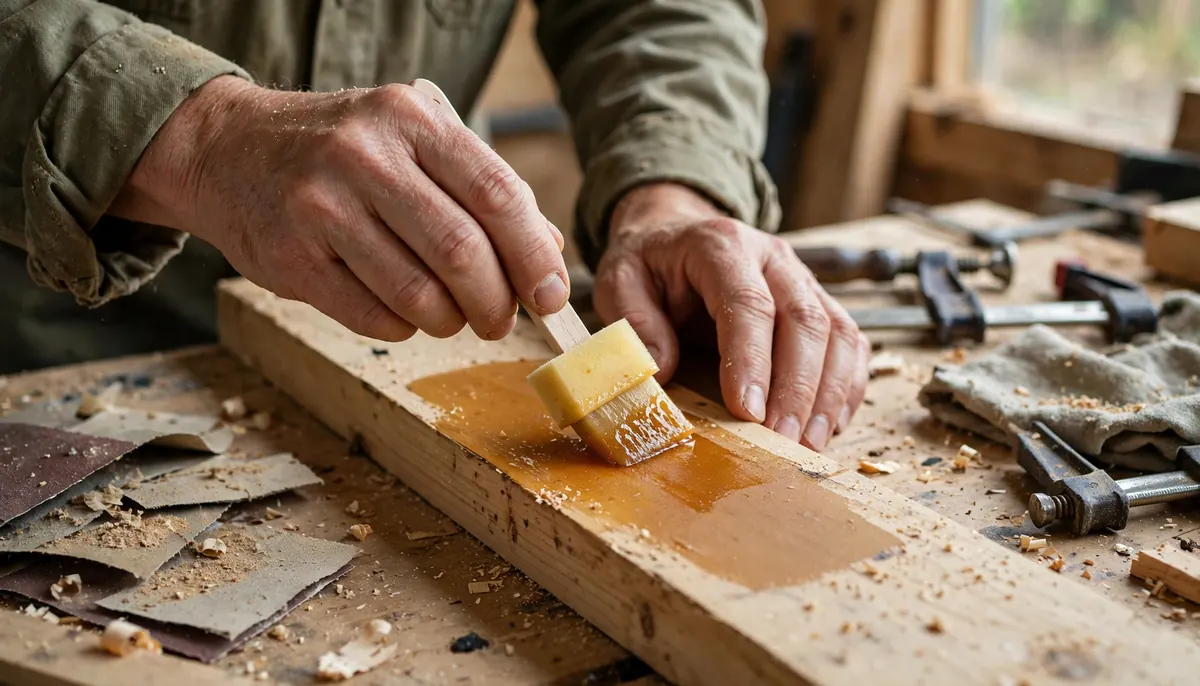
- Apply thin. Brush or roll a wet coat and let it soak. On end grain, keep feeding it until the wood stops drinking.
- Recoat within the window. Most systems want the second coat while the first is still slightly tacky. If it has cured hard, scuff with 120 grit first.
- Topcoat for UV. Epoxy chalks and yellows in sunlight. Two coats of a marine varnish or exterior paint over the cured resin protect it.
A foam brush leaves fewer marks than a bristle brush on the first penetrating coat. For the build coats, a short-nap roller lays it down fast on flat trim.
Where Epoxy Sealing Works and Where It Doesn’t
Epoxy earns its keep on horizontal surfaces that catch water and on end grain that wicks it. Window sills, door bottoms, porch post bases, stair treads, and the scarfed ends of exterior trim are all good candidates. On those spots the resin consolidates soft fibres and sheds water off the edge.
It is the wrong tool for a board that is rotten through, for structural members carrying load, and for anything that needs to flex. A deck board that moves underfoot will crack a rigid coating at the fastener heads. If you are thinking about coating a whole floor, the same limits apply, and this piece on whether you can put epoxy on a wood floor walks through the movement and moisture issues.
Interior furniture is a different conversation. A tabletop gets a bar-top pour for depth and gloss, not for waterproofing, and the wood underneath still needs to be dry and stable before the resin goes down.
Common Mistakes That Kill the Bond
Most failures I see come down to four things.
- Sealing damp wood. Trapped moisture has to go somewhere. It lifts the film from underneath.
- Skipping the preservative. Epoxy keeps water out, but it does not kill existing fungal growth. Treat first.
- Coating over old finish. Resin bonds to fibre, not to varnish.
- Leaving it bare outside. Unprotected epoxy breaks down under UV within a season or two. It needs a topcoat.
One more: mixing too much at once. A deep cup of resin generates its own heat and can kick in minutes. Shallow containers and small batches keep you in control.
When to Call a Pro
If the rot runs into a structural member, a sill plate, or a load-bearing post, get a carpenter or a rot specialist to look at it. Epoxy consolidation is a surface repair, and no coating makes a compromised beam safe again. The same goes for any repair where the wood is holding up a roof, a deck ledger, or a stair stringer.
For exterior repairs where you are filling gaps as well as sealing, remember that standard water-based wood filler is not rated for weather, as this guide to using wood filler outside explains. Epoxy-based filler is the exterior-grade option, and it can be shaped and sanded once cured.
Epoxy Wood Sealer FAQ
Can I use epoxy sealer on wet wood?
No. Epoxy needs dry fibre to bond, and moisture in the wood will push the film off as it cures. Let the timber dry to under 15 percent moisture content, or wait for a dry spell if the piece lives outside.
Does epoxy sealer stop rot permanently?
It stops water from reaching the wood, which is what rot needs to keep growing. It does not kill fungus already in the grain. Cut out soft wood, treat the cavity with a borate preservative, then seal.
How many coats of epoxy does wood need?
Two thin coats is the usual minimum, with a third on end grain and any spot that stays wet. Thin coats soak in better than one thick pour, and they cure without trapped air.
Will epoxy sealer yellow in the sun?
Yes, most epoxy resins chalk and yellow under UV. That is why exterior work needs two coats of marine varnish or exterior paint over the cured epoxy.
Can I paint over epoxy sealer?
Yes, once the epoxy has fully cured and been scuffed with 120 grit. Check the coating label for the recoat window, because some paints will not adhere to a glossy amine blush left on the surface.

Martin Flood
Martin Flood has been working in the construction industry for over 20 years as a general contractor with expertise in remodeling projects that are large or small. He has furthered his career by specializing in epoxy resin flooring, providing excellent service to both commercial and residential clients. Martin’s experience enables him to offer professional advice on how to choose the right type of project based on your needs and budget.
View all posts by Martin Flood →