

Follow the manufacturer’s instructions for mixing, pouring, and curing, and avoid using a cup unless its suitability for food contact is confirmed. Most resin cups sold at craft fairs, and most made with casting resin from a hobby shop, are decorative pieces and should stay on the shelf. If you cannot confirm the resin type and the cure, treat the cup as decoration.
What “food safe” actually means on a resin label
Epoxy comes in two families, and the label tells you which one you have. Casting resin is made for embedding objects and pouring thick decorative blanks. Coating resin, sometimes sold as tabletop or bar-top epoxy, is formulated to sit on a surface as a thin, hard film. A label that states suitability for food contact is the point to check before a cup holds a drink.
Read the technical data sheet alongside the bottle. It lists the mix ratio, the working time, and the full cure schedule. If the sheet does not mention food contact, the answer is no.
Where a topcoat is used, it works only when that layer touches the liquid and it is applied over a fully cured base. Check the label on both products before you trust the cup.
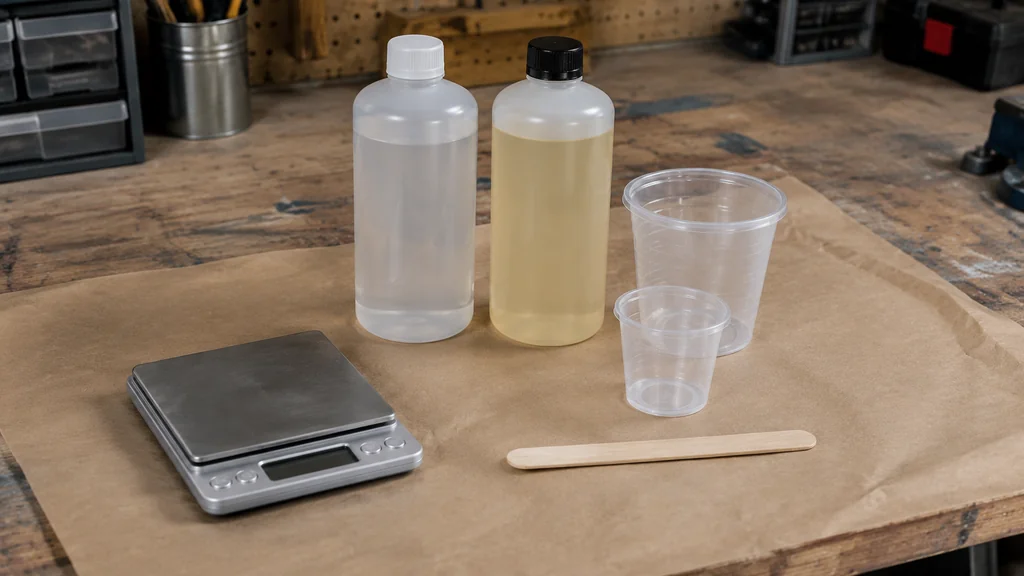
Table of Contents
Why the cure matters more than the brand
Resin and hardener are mixed to a ratio, and the sheet states how long the mix needs to reach full cure. Get the ratio wrong, stir too slowly, or pour in a cold garage in January, and the reaction may not finish. The surface may feel hard while the interior stays soft and slightly tacky.
A surface can feel dry to the touch before the resin reaches full cure. Demolding time and full cure time are different numbers on the same sheet. Follow the sheet, then add margin if your workspace is cool or humid. A cheap Hygrometer takes the guesswork out of it.
If you are weighing whether a resin piece belongs near your mouth at all, the same logic applies to other resin items people ask about, including whether bongs made from resin are safe.
The common mistakes that ruin a resin cup
Most failures come from problems with the mixing or pouring technique.
- Eyeballing the ratio. Epoxy is not forgiving like paint. Use a digital scale for small batches and measure by weight when the sheet calls for it.
- Stirring for ten seconds. Slow, deliberate mixing for the full time on the sheet, scraping the sides and bottom of the cup, is what prevents streaks of unreacted hardener.
- Pouring too thick. Deep pours trap heat and can crack or yellow. Build in layers if the piece is chunky.
- Skipping the topcoat. A decorative body needs a food-safe layer on top if it will ever hold liquid.
- Using it too soon. A cup that smells faintly of chemicals is not ready.
- Sandpaper on the inside. Scratches hold residue and are hard to clean.
How to make a resin cup you can actually drink from
- Buy a resin whose label states it is suitable for food contact, and read the technical data sheet before you open it.
- Measure resin and hardener by weight on a digital scale, following the exact ratio on the sheet.
- Mix slowly for the full time listed, scraping the sides and bottom of the mixing cup.
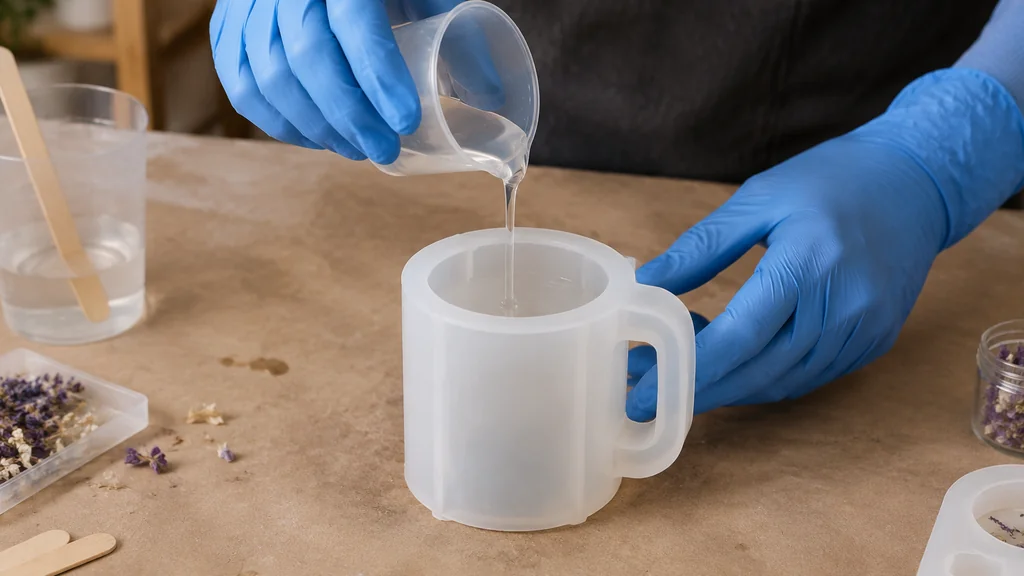
- Pour in thin layers if the walls are thick, and let each layer reach its stated cure stage before the next.
- Let the piece cure for the full schedule on the sheet, plus extra time in a cool or damp workspace.
- Apply a food-safe topcoat to the surface that will touch liquid, if your system calls for one.
- Wash the finished cup by hand with mild soap, following the product instructions on dishwashers and microwaves.
- Set the cup aside if the surface turns cloudy, tacky, or smells of chemicals.
If you are coating an existing vessel instead of casting a new one, the same steps apply, and there is a separate walkthrough for putting epoxy on a coffee mug that covers surface prep and rim masking.
Hot drinks, alcohol, and the dishwasher
Heat, alcohol, and long soaks are the conditions to think about before a resin cup holds a drink. Hand wash in lukewarm water and dry it right away.
If you want a shot glass, buy glass.
Storage matters too. A cup kept in a hot car or a sunny windowsill will yellow over time. Keep resin drinkware in a cupboard, away from direct sun, the way you would store a good wooden bowl.
When to call it decorative and move on
Some cups cannot be saved, and knowing when to stop is part of the craft. If the surface feels tacky after weeks of curing, if the inside is scratched from scrubbing, if the rim has chips that trap liquid, or if the piece was poured with a resin that never claimed food contact, set it aside.
A resin cup that has gone cloudy, smells of chemicals, or has a soft spot is a display piece from that point on. Put a small plant in it, use it for pens, or set it on a shelf.
There is also a practical argument. A plain Glass tumbler or a Ceramic mug takes heat and alcohol without complaint, and goes in the dishwasher. Resin earns its place on a table as art, as a coaster, or as a tray. The full rundown on the safety question lives in this guide to drinking from an epoxy resin cup, and it reaches the same conclusion.

Epoxy Resin Cup FAQ
Is cured epoxy resin toxic?
Mix at the correct ratio and follow the full cure time on the data sheet. An uncured or partly cured piece is the state to avoid. That is why the cure schedule matters more than the brand name on the bottle.
Can I seal a resin cup with another coat to make it safe?
A topcoat covers the surface that touches liquid, and it belongs over a base that is already fully cured and stable. A topcoat over a tacky or under-cured body traps the problem underneath.
Does hot coffee damage a resin cup?
If you want a mug for coffee, ceramic or glass handles the heat without any of this worry.
How long should a resin cup cure before first use?
Follow the full cure time on the technical data sheet, which is longer than the demolding time. Cool, damp conditions stretch that timeline, so add margin in a garage in winter. If the cup still smells of chemicals, it is not ready.
Are resin shot glasses safe?
Alcohol sits in direct contact with the walls in a shot glass. A glass shot glass is simpler and has no cure schedule to get wrong.

Martin Flood
Martin Flood has been working in the construction industry for over 20 years as a general contractor with expertise in remodeling projects that are large or small. He has furthered his career by specializing in epoxy resin flooring, providing excellent service to both commercial and residential clients. Martin’s experience enables him to offer professional advice on how to choose the right type of project based on your needs and budget.
View all posts by Martin Flood →