

Epoxy resin fumes are a concern while the resin is still curing, and most attention belongs on the first hours after mixing. The two parts react together during mixing and curing.
If you are restoring furniture, casting a tabletop, or filling a crack in a salvaged chair, you are working with a two-part chemical system. That changes how you set up your workspace compared to ordinary wood glue. This guide covers how the parts behave, how long the smell lingers, and the steps that keep your workspace under control.
What is actually in epoxy resin fumes?
Epoxy comes as two parts, a resin and a hardener, and you mix them in the ratio printed on the kit label. Uncured resin itself has a mild odor, while the hardener smell is sharp and ammonia-like.
In a closed garage or a basement workshop, that smell builds up faster than you would expect. Airflow is what moves it out of the room.
The kit label and the safety data sheet that comes with it are the source for handling, storage, and first-aid information on your specific product. Read them before you open the containers, and keep them with the kit. Epoxy Resin and hardener are the two components; Nitrile Rubber Gloves are commonly used to limit skin contact during mixing and cleanup.
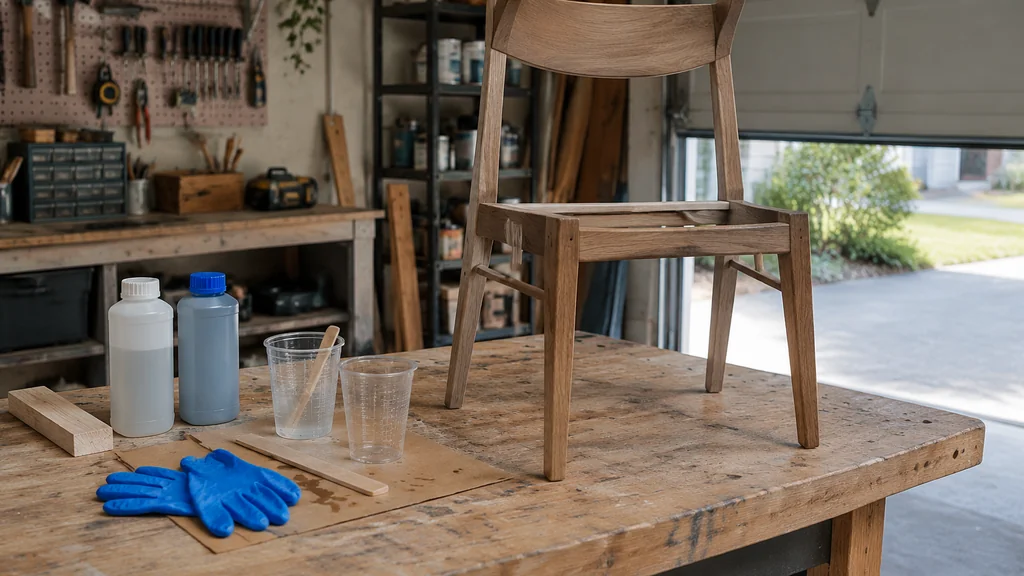
Table of Contents
Are epoxy resin fumes toxic or just smelly?
The hardener carries the sharp smell, and it is the part people notice first. Working in a sealed room for hours every weekend is a different situation from opening a kit now and then.
Your kit’s safety data sheet lists the health information, first-aid measures, and exposure guidance for that product. If you want to know how a particular brand behaves, that sheet is where the answer sits. Our article on whether epoxy resin fumes are toxic goes deeper into how the two parts differ.
How long do epoxy fumes last?
Epoxy odor can be noticeable during mixing and curing. Check the kit label and safety data sheet for product-specific guidance.
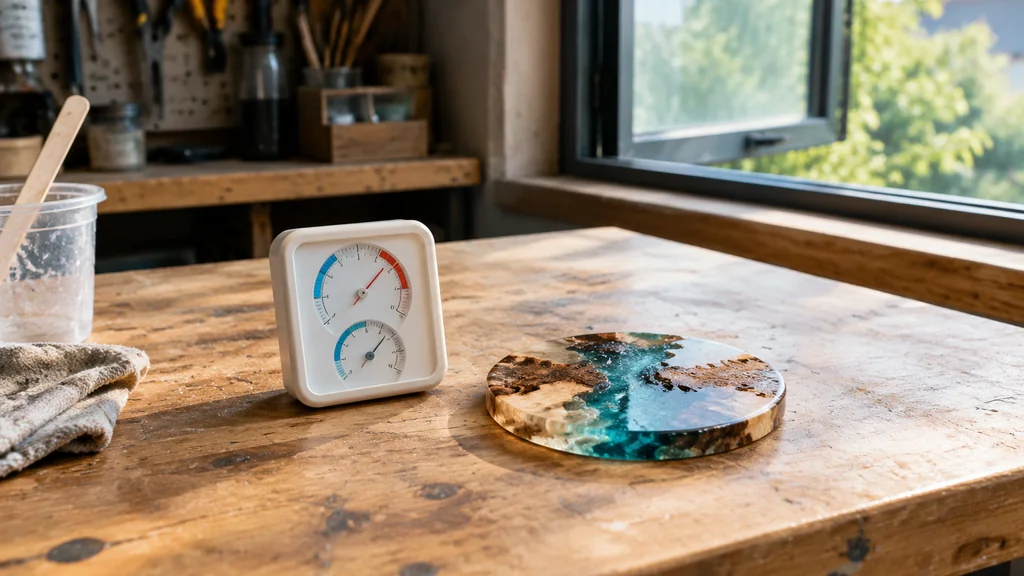
Temperature matters more than most people realize. A warm room speeds up the cure, while a cold room slows everything down and can leave the surface tacky. This temperature-dependent curing also affects Polyester Resin and other Thermosetting Materials. Humidity plays a part as well, so check the label for the range your product was designed for.
Leave the piece in the ventilated space until it is hard and no longer tacky, then give it extra time before you bring it into living space. For a comparison with the fillers and putties you may be using alongside it, see our piece on whether wood filler fumes are dangerous.
What happens if you inhale resin fumes?
If the smell bothers you, stop, get outside, and do not go back in until the air is clear. The safety data sheet that ships with your kit lists the first-aid measures for that product, so follow those instructions rather than guessing.
Skin contact matters too. Nitrile gloves keep the mixed resin off your hands during mixing, pouring, and cleanup. Wash with soap and warm water afterwards, and check the safety data sheet for what to do if resin gets in your eyes.
The safe way to work with epoxy resin
This is the sequence I use on any restoration job where epoxy is involved, whether it is a tabletop pour or a small crack repair.
- Move the work outside, or into a space with cross-ventilation and a door or window you can open wide.
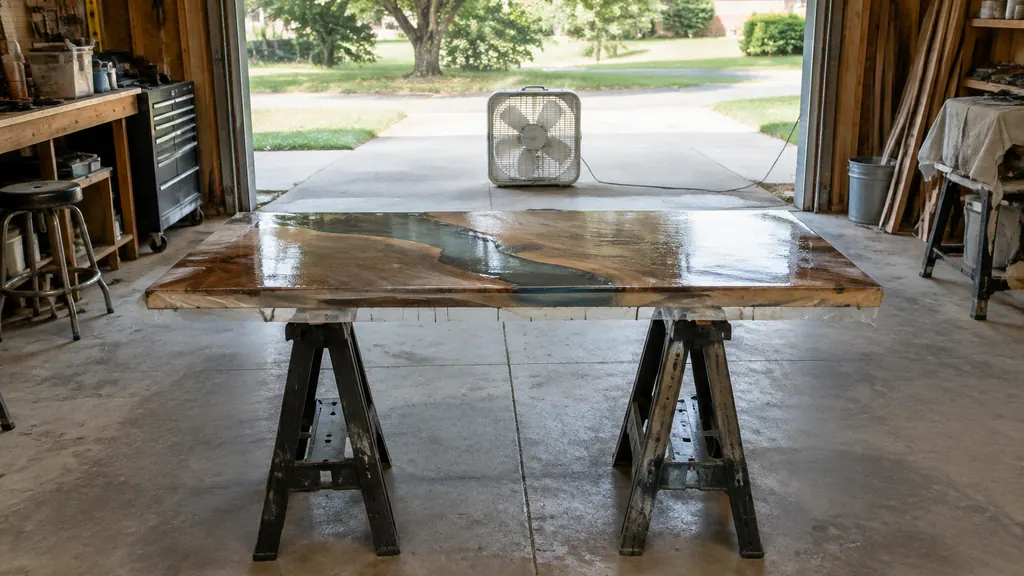
- Set up a fan to pull air away from your face and push it toward the opening, not across the wet piece.
- Put on nitrile gloves and safety glasses, and follow the respiratory guidance on your kit’s safety data sheet.
- Mix only as much resin as you can use in one session, in a shallow cup to limit heat buildup.
- Work at the temperature and humidity range printed on the kit label, and note the pot life.
- Leave the piece in the ventilated space for the full cure window before moving it indoors.
- Wash your hands and forearms with soap and water, and clean the bench before you eat or drink.
- Store leftover resin and hardener sealed, upright, and out of reach of children and pets.
Respiratory protection depends on the product and the space you are working in, so the safety data sheet and the filter packaging are the place to check what your kit calls for. The label on your kit and the filter packaging also carry the change interval for any cartridges you use.
Common mistakes that raise your exposure
Mixing in a closed bedroom or a basement with no airflow is the biggest one. So is leaving a freshly poured piece on the kitchen counter overnight because it “doesn’t smell much.” Small rooms concentrate vapor fast, and the smell fades before the chemicals are actually gone.
Another mistake is working barehanded because the gloves are annoying. Epoxy is a skin sensitizer, and once you are sensitized, even brief contact can trigger a reaction. Keep gloves on for mixing, pouring, and cleanup, and change them if resin gets on the outside.
Finally, do not judge safety by the cured result. A hard, glossy finish tells you the reaction is mostly complete. Ventilation still matters while airborne chemicals clear. Ventilate, wait, and then move the piece.
When to call a pro or a doctor
Call a doctor if you have breathing difficulty, chest pain, a spreading rash, or symptoms that last more than a day after exposure. If you have asthma, a heart condition, or you are pregnant, talk to your doctor before you take on a resin project. That conversation costs nothing and settles the question for your situation.
Hire out the work if the piece is large, if the pour needs a controlled environment, or if your only workspace is a sealed room. A shop with proper ventilation and a spray booth can handle a big tabletop in a way a home garage cannot. For small repairs on salvaged furniture, doing it yourself is reasonable as long as you follow the steps above.
Are epoxy resin fumes dangerous? FAQ
Are epoxy resin fumes dangerous after they cure?
No. Once the resin is fully cured and hard, it is generally considered inert, and the vapor release has effectively stopped. Most exposure occurs during mixing and curing. Fully cured resin presents a different exposure profile.
Can epoxy fumes make you sick days later?
Sensitization can build over repeated exposures, so a reaction may appear after a session even if earlier ones were fine. If symptoms persist or worsen, see a doctor rather than waiting it out.
Is epoxy safe to use indoors in winter?
Only with real ventilation, which usually means an open window and a fan even when it is cold. If you cannot ventilate, wait for a milder day or move the work to a garage or shed.
Do I need a respirator or is a mask enough?
A dust mask will not stop organic vapors. Use a respirator with Organic Vapor Cartridges, and follow the manufacturer’s replacement schedule. These cartridges are distinct from particulate filters used for sanding dust.
How long before I can bring the piece inside?
Wait until it is fully hard and no longer smells, then add a safety margin. Check your kit label for the cure time at your working temperature, since cool rooms slow the reaction.

Martin Flood
Martin Flood has been working in the construction industry for over 20 years as a general contractor with expertise in remodeling projects that are large or small. He has furthered his career by specializing in epoxy resin flooring, providing excellent service to both commercial and residential clients. Martin’s experience enables him to offer professional advice on how to choose the right type of project based on your needs and budget.
View all posts by Martin Flood →
1 thought on “are epoxy resin fumes dangerous?”