
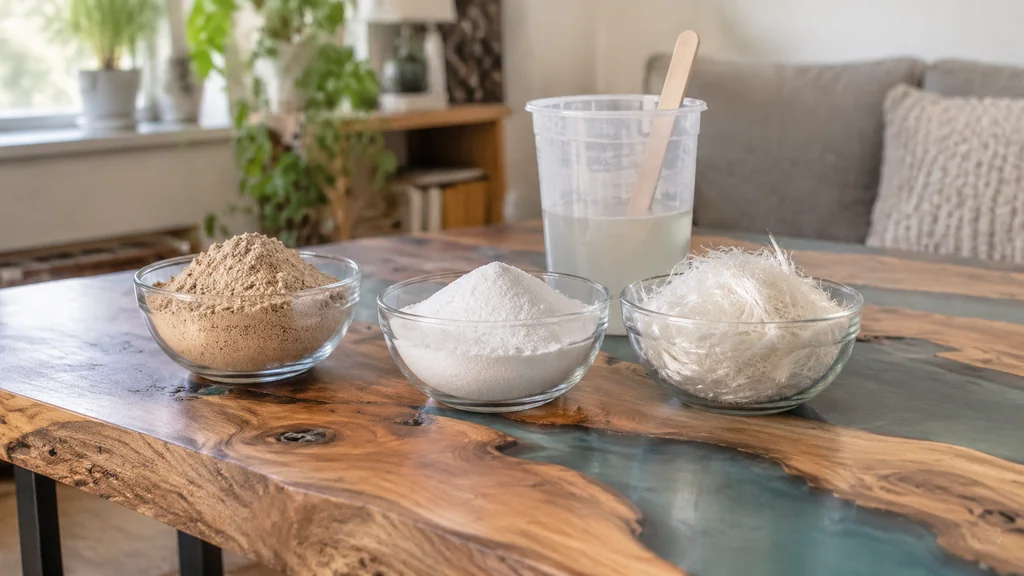
Wood flour, colloidal silica and chopped fibers each turn runny epoxy into a paste with a different job. Wood flour makes a sandable, stainable mix for filling and fairing, colloidal silica thickens epoxy into a non-sagging paste, and fibers add tensile strength and impact resistance to joints and repairs. Pick the filler for the job, add it slowly, and stop when the mix holds its shape on a stick.
Why Thicken Epoxy at All
Straight epoxy from the bottle is thin. On a vertical face it runs, in a gap it drains out, and on a porous surface it soaks in before it can bond anything. Thickening changes the flow so the glue stays where you put it and carries load while it cures.
Mixing two fillers is common when one job needs both flow control and strength.
There is a practical limit. Once the mix passes the consistency of peanut butter, it stops wetting the surface properly and the bond suffers. Add filler in small spoonfuls and stir until it is fully wetted before adding more. Lumpy paste hides dry pockets that never bond.
Keep the resin and hardener ratio exact. Filler is not part of the chemistry, so it never changes the mix ratio printed on the label. Check the label for the ratio and the working time, since those vary by product.

Table of Contents
Wood Flour: The Sandable, Stainable Filler
Wood flour is fine sawdust ground to a powder, and it has a long history in composites. Prior to 1920, wood flour was used as the filler in ¼-inch thick Edison Diamond Discs, which tells you how well it binds with a resin matrix. In the shop it does something similar, bulking up epoxy into a paste that sands and finishes like wood.
Its strengths are fairing and filling. A wood flour mix spreads like peanut butter, feathers out at the edges, and takes stain and topcoat reasonably well because the filler itself is wood. Use it for filling dents, rebuilding a rounded edge, or fairing a repaired surface before paint.
Dust control matters here. OSHA’s permissible exposure limit for wood dust is 15 mg/m3 total and 5 mg/m3 respiratory exposure over an 8-hour workday, while NIOSH has set a recommended exposure limit of 1 mg/m3 over an 8-hour workday. Work with ventilation, wear a respirator rated for fine dust, and keep the bag closed between scoops.
The particle size explains why the dust hangs in the air. Particles below 50 μm are not normally visible to the naked human eye, and particles of concern for human respiratory health are those smaller than 100 μm. The finest fraction is the one you cannot see, so do not judge the air by eye. Wood industry dust particles up to 5 μm precipitate mostly in the nasal cavity, raising upper respiratory cancer risk, which is why the limits above are set where they are.
For context on how widespread this exposure is, in 2000–2003, about 3.6 million workers (2.0% of the employed EU-25 population) were occupationally exposed to inhalable wood dust. Mix in a ventilated space and clean up with a damp cloth. A dry brush can put settled dust back into the air.
If you are filling rot or damaged timber, the approach differs and the mix needs to bond to soft, damp wood. My guide to epoxy resin wood filler for rot and damage walks through that repair sequence. Wood flour mixes also take stain unevenly on end grain, so test on scrap before you commit to a finish, and read how to cover wood filler with stain if the patch shows through.
Colloidal Silica: Strength Without Sag
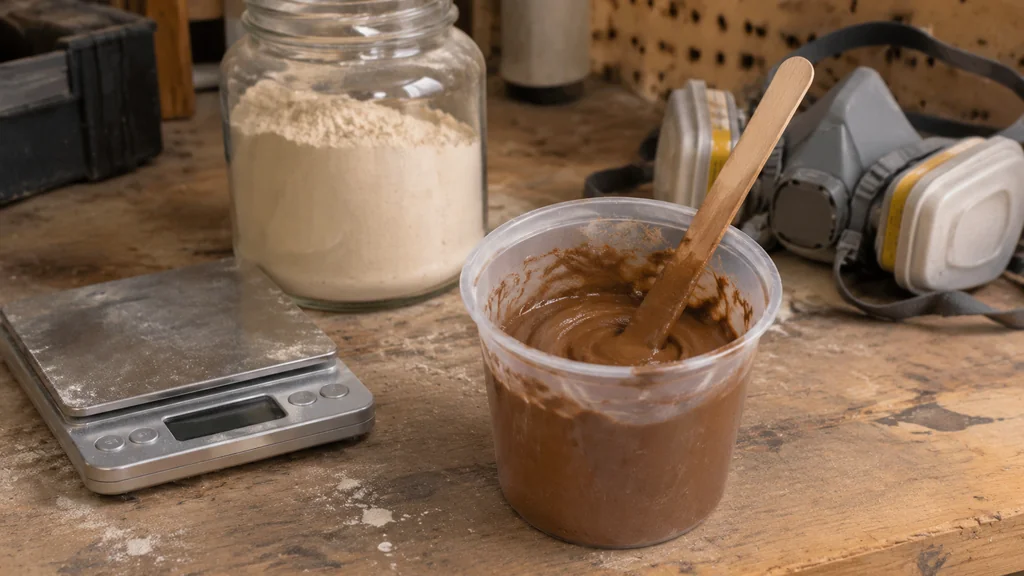
It is a fine white powder of silica particles, and it turns epoxy into a stiff, non-sagging paste that stays put on a vertical surface.
The particles are small. Most colloidal silicas are monodisperse suspensions with particle sizes of roughly 30 to 100 nm in diameter, and the subunits of colloidal silica particles are typically 1 to 5 nm in size.
Colloidal silicas have particle densities in the range of 2.1 to 2.3 g/cm3.
Stability matters for the liquid grades sold as additives. Particles much greater than 150 nanometers are subject to sedimentation in colloidal silica suspensions, so a liquid product that has sat on the shelf may need shaking before use.
The chemistry is pH sensitive. If the pH is reduced below 7 or salt is added, colloidal silica units tend to fuse into chains forming silica gels. In practice that means keeping acids, hardener residue and salty water away from an open container of liquid silica additive, and cleaning tools before the gel sets.
Wear a dust mask when scooping it, since the powder is fine and airborne.
Fiber Fillers: Tensile Strength and Impact Resistance
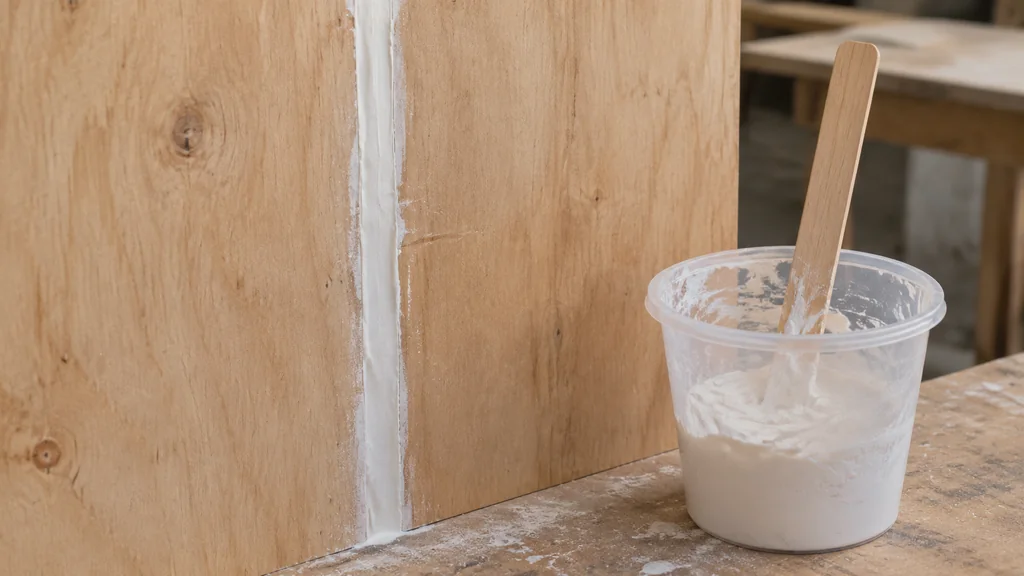
Chopped fibers, whether glass, carbon or aramid, add what powders cannot. They carry tensile load across a gap, toughen the cured mix against impact, and bridge cracks so a repair does not reopen at the same line.
The trade is workability. Fiber mixes are stringy, hard to spread thin, and impossible to sand smooth without cutting the strands and losing the benefit. Use them where the mix stays buried, such as a structural fillet, a gap fill behind a patch, or a reinforcing layer under a skin.
Chopped strand and milled fiber are the two common forms. Chopped strand is longer and adds bulk and bridging. Milled fiber is shorter and mixes into a smoother paste that still adds toughness. For most repair work, milled fiber is easier to handle and wets out faster.
Wetting is the step people rush. Add the fiber to the mixed resin a little at a time and fold it in gently, because whipping traps air. Let the mix sit briefly so the strands absorb resin, then stir again. Dry patches of fiber in the cured mix are weak spots.
Fibers do not replace the need for a proper joint. They reinforce a joint that is already fitted and clamped. A gap filled with fiber mix still needs the surfaces roughened and clean, and the repair still needs to be held in place until the epoxy sets.
Mixing Order and Consistency
The sequence matters more than the recipe. Get the resin and hardener combined fully first, then add filler, and add it in stages so you can stop at the right consistency.
- Measure resin and hardener by weight or volume exactly as the label states, and mix them thoroughly for the full working time.
- Add the first scoop of filler and stir until no dry powder remains, scraping the sides and bottom of the cup.
- Add filler in small increments, checking consistency after each one, until the mix holds a ridge on the stick.
- For a two-filler mix, add the powder first, then the fiber, folding gently to avoid trapping air.
- Let the mix stand a short while to wet out and release bubbles, then stir once more before use.
- Apply within the working time printed on the label, and mix a fresh batch rather than thinning a stiffened one.
Consistency targets are easier to judge by eye than by number. A glue mix for tight joints runs slowly off the stick. A fillet mix holds a peak. A fairing mix spreads like soft butter. If you overshoot, add a little fresh resin to loosen it, but keep the ratio in mind and mix a new batch if you have added much.
Working time shortens as the batch heats up, and a thick mix generates heat faster than a thin one. Mix in a wide, shallow container. In warm weather, set the cup in a tray of cool water if the batch starts to cook. Check the label for the working time at your shop temperature.
Common Mistakes and When to Call a Pro
The most common failure is adding too much filler. A mix that crumbles when spread has lost its wetting ability and will not bond. If the paste tears instead of flowing under the stick, add resin or start again.
The second is skipping surface prep. Epoxy bonds to clean, roughened, dry surfaces. Dust, oil and old finish kill the bond regardless of the filler. Sand, wipe with a solvent, and let it dry before you mix.
The third is using the wrong filler for the load. Wood flour in a structural fillet, or fiber in a surface that needs to sand fair, both create rework. Match the filler to the job before you open the bag.
Dust and skin contact deserve respect. Wear gloves, ventilate the space, and use a respirator when handling fine powders. Check the label and local code for disposal of cured epoxy waste and solvent rags.
Some jobs are beyond a garage repair. Deep structural rot in a load-bearing beam, a hull below the waterline, or anything that carries a building’s weight should go to a professional who can assess the load path. The same applies if you are unsure whether a repair needs engineering input. For exterior work, read can you use wood filler outside? before you choose a filler, since weather exposure changes what holds up. Also read how to cover wood filler with stain if the patch needs a stained finish.
Epoxy Thickeners FAQ
How much colloidal silica do I add to epoxy?
Add it in small increments until the mix holds a ridge on the stirring stick, since the exact amount depends on the resin and the consistency you need. Check the label for any filler guidance from the manufacturer.
Can I mix wood flour and colloidal silica in one batch?
Yes, and many shops do. Add the powder first, then the fiber, folding gently to avoid trapping air. Keep the total filler load low enough that the paste still wets the surface.
Is colloidal silica the same as fumed silica?
They are related but not identical. Colloidal silica is supplied as a suspension of fine particles, while fumed silica is a dry powder made in a flame process.
Why did my epoxy mix turn crumbly?
Too much filler is the usual cause. Once the paste passes the point where it wets the surfaces, it loses bond strength and tears instead of spreading. Add a little fresh resin to loosen it, or mix a new batch with less filler.
Do fiber fillers make epoxy waterproof?
Any repair exposed to weather needs a topcoat. Check the label for the product’s exposure limits.

Martin Flood
Martin Flood has been working in the construction industry for over 20 years as a general contractor with expertise in remodeling projects that are large or small. He has furthered his career by specializing in epoxy resin flooring, providing excellent service to both commercial and residential clients. Martin’s experience enables him to offer professional advice on how to choose the right type of project based on your needs and budget.
View all posts by Martin Flood →