
Cured epoxy does not melt in the sun. That is the short answer. Epoxy is a thermoset, and thermosets behave in a particular way when they get hot. Sunlight and heat still affect cured epoxy over time, and this article explains how. The focus here is on cured epoxy. Liquid resin that has not been mixed and cured is a different subject.

Why cured epoxy does not melt
The Wikipedia article “Thermosetting polymer” explains that thermosets are made by irreversibly hardening a resin, and that curing forms extensive cross-linking which gives an infusible and insoluble polymer network. That word “infusible” carries real weight for anyone who has watched a resin project sit in direct summer light and wondered whether it would turn to liquid. According to Wikipedia, thermosets generally keep their shape, and they normally decompose before melting, which means the material has no soft, moldable stage at high temperature the way a thermoplastic does.
Thermoplastics are shaped by melting. Thermosets are shaped before curing. Once the network has formed, the piece cannot be remelted for reshaping afterward. The Wikipedia article “Thermosetting polymer” also notes that thermosets suit high-temperature uses up to the decomposition temperature.
Table of Contents
What sunlight does to epoxy
Sunlight brings ultraviolet radiation, and the Wikipedia article “Epoxy” says that epoxies deteriorate by exposure to UV light, so they are typically not used in a boat’s outer layer. The same article reports that epoxy paints tend to deteriorate, a process described as chalking out, when UV exposure continues. The surface has changed, and the piece is still solid.
The Wikipedia article “Epoxy” states that epoxies deteriorate by exposure to UV light, so they are typically not used in a boat’s outer layer.
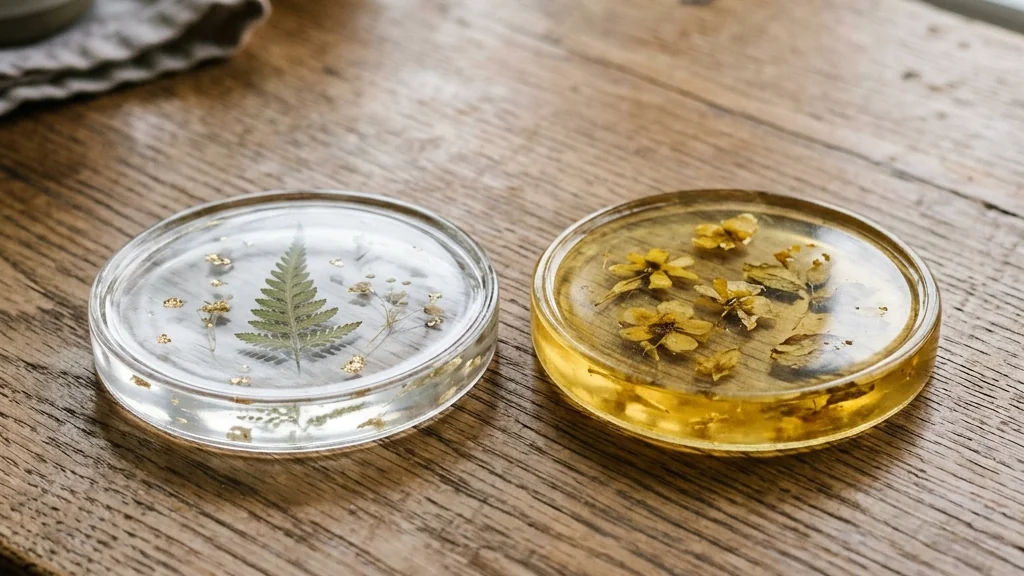
Yellowing is a separate matter, and the Wikipedia article “Epoxy” calls it a common phenomenon for epoxy materials. Epoxy resins yellow with time, even when not exposed to UV radiation. A piece kept indoors can shift in colour over time, and a piece kept outdoors can do the same. Yellowing changes appearance. It does not turn the cured piece into a liquid.
How heat affects epoxy
Heat matters for epoxy, and the Wikipedia article “Epoxy” gives one clear figure. The strength of epoxy adhesives is degraded at temperatures above 350 degrees Fahrenheit (177 degrees Celsius). That figure concerns adhesive strength. A bonded joint in strong heat can lose holding power, and the cured material itself stays a solid.
Cure quality shapes how a finished piece performs. The Wikipedia article “Epoxy” says the cure temperature should typically reach the glass transition temperature of the fully cured network for the best properties, and that insufficient heat during cure leaves incomplete polymerisation. Our guide on whether resin melts in heat covers related questions about warmth and cured pieces. If you work with epoxy counters, the page on putting a hot pan on epoxy countertops explains how direct heat from cookware fits into the picture.
How to protect epoxy outdoors
The Wikipedia article “Epoxy” reports that in marine use epoxy is often over-coated with conventional or two-part polyurethane paint or marine varnishes that provide UV protection. The same article notes that cycloaliphatic types lack aromatic groups and have considerably improved UV stability, which makes the resin choice worth a look before a project goes outside. Our article on using epoxy resin outside walks through outdoor projects in more detail.
Cracks deserve attention too, and the guide on repairing cracked epoxy shows how to handle them. Our page on why resin cracks covers the causes behind those splits.

Bottom line
Cured epoxy is a thermoset, so it does not melt in the sun the way a thermoplastic does. Strong heat can weaken adhesive strength above 350 degrees Fahrenheit (177 degrees Celsius) according to the Wikipedia article “Epoxy”, and sunlight causes yellowing and surface deterioration.
FAQ
Is epoxy a thermoplastic?
No. The Wikipedia article “Epoxy” describes epoxy as a thermosetting polymer, and thermosets cannot be remelted for reshaping after curing.
Does epoxy turn yellow?
Yes, sometimes. The Wikipedia article “Epoxy” says epoxy resins yellow with time, even without UV exposure.
Can I leave epoxy outside without protection?
UV light deteriorates epoxy over time. The Wikipedia article “Epoxy” notes that marine users over-coat epoxy with polyurethane paint or marine varnish for UV protection.

Martin Flood
Martin Flood has been working in the construction industry for over 20 years as a general contractor with expertise in remodeling projects that are large or small. He has furthered his career by specializing in epoxy resin flooring, providing excellent service to both commercial and residential clients. Martin’s experience enables him to offer professional advice on how to choose the right type of project based on your needs and budget.
View all posts by Martin Flood →